


Wie Hospitality-Boards bessere Führungsentscheidungen treffen: Ein Leitfaden für eine erfolgreiche Executive & Board-Suche.


Ein Aufsichtsrat, der eine Hoteldirektorin oder einen Hoteldirektor sowie eine Personalberatungsfirma auf C-Suite- oder nicht-executive Direktionsebene engagiert, steht vor einer entscheidenden Entscheidung. Es geht nicht darum, wer eingestellt wird. Stattdessen zählt, wie die Firma denkt. Der Aufsichtsrat kann in der Regel den Lebenslauf eines Kandidaten bewerten. Eine Sache bleibt jedoch verborgen, bis die falsche Person im Sessel sitzt. Hat die Personalberatung als transaktionaler Vermittler agiert oder als Kalibrierungsschicht zwischen der Führungsabsicht und der Marktrealität?
Dies ist ein Leitfaden für Vorsitzende des Aufsichtsrats, Eigentümer, Hauptinvestoren und führende unabhängige Direktoren in der Hotellerie. Insbesondere richtet er sich an alle, die eine Executive- und Board-Suche Firma auf der höchsten Ebene des Führungssystems. Sie nutzt, was wir gelernt haben bei Cornerstone International Group über Hunderte von Führungsmandaten. Insbesondere destilliert es, was die Suchen unterscheidet, die stabilisierende Führungskräfte hervorbringen, von denen, die teuren Verschleiß produzieren.
Die eigentliche Frage ist nicht “wen stellen wir ein?”
In der Hotellerie treten Führungsentscheidungen selten als Einstellungsprobleme auf. Stattdessen erscheinen sie als Führungsdefizite nach einer unerwarteten Kündigung oder als Nachfolgemoment nach einer Pensionierung. Manchmal ergeben sie sich als Integrationsherausforderung nach einer Akquisition oder der Notwendigkeit, ein Unternehmen in einem wettbewerbsintensiven Markt neu zu positionieren. Unter jedem dieser Momente liegt dieselbe grundlegende Frage, und sie lautet nicht, wen wir einstellen.
Die eigentliche Frage auf Führungs- und Aufsichtsebene ist eine andere. Welches Führungsresultat benötigt das Unternehmen tatsächlich? Und ist der Markt auf diese Erwartung ausgerichtet?
Das ist die Lücke, die die meisten Führungsrecherchen nicht schließen können. Der Aufsichtsrat verfasst das Briefing. Die Stellenbeschreibung folgt. Dann führt die Personalberatung die Suche aus. Sechs Monate später überprüft der Aufsichtsrat, warum die Platzierung nicht funktioniert. Mehrmals ist die Antwort dieselbe. Das ursprüngliche Briefing beschrieb einen Führer, den der Markt nicht realistisch liefern konnte oder der nicht motiviert war.
Kalibrierung statt Annahme
Die meisten Suchfirmen Jedes Mandat beginnt mit einer Stellenbeschreibung. Wir beginnen mit einer Hypothese über Führung. Das Briefing ist kein fertiges Dokument, gegen das wir ausführen. Vielmehr ist es eine Ausgangshypothese, die wir gegen das tatsächliche Marktverhalten testen, bevor die Suche überhaupt beginnt.
“Wir betrachten das ursprüngliche Mandat nicht als feststehend. Wir betrachten es als Ausgangshypothese, die wir anhand des Marktverhaltens überprüfen.”
Florian Kittler, geschäftsführender Gesellschafter, Cornerstone Hospitality
Bevor die formelle Umsetzung beginnt, beziehen wir den Markt im Auftrag des Auftraggebers ein. Zuerst testen wir, wie der Markt die Rolle wahrnimmt und ob das Briefing mit dem übereinstimmt, was er akzeptieren wird. Dann überprüfen wir, wo die Verfügbarkeit und Motivation der Kandidaten tatsächlich liegen. Schließlich fragen wir, ob die im ursprünglichen Briefing kodifizierten Erwartungen strukturell realistisch sind. Diese frühe Einschätzung ist kein Höflichkeitsakt. Sie ist der entscheidende Unterschied zwischen einem Briefing, das den richtigen Kandidaten gewinnt, und einem, das ihn stillschweigend disqualifiziert.
Das Ergebnis der Kalibrierung ist schärfer als das Ergebnis der Annahme. Es ändert, wonach das Gremium sucht. Der Vergütungsspielraum verschiebt sich. Das Geographie verändert sich ebenfalls. Und auch die Kandidatenerfahrung ändert sich, denn jeder im Prozess weiß jetzt, wie gutes Leadership tatsächlich aussieht.
Welche Änderungen auf Vorstandsebene
Die Suche nach Aufsichtsratsmitgliedern unterscheidet sich von der Suche nach Führungskräften. Es handelt sich um eine andere Kategorie von Arbeit. Auf der Führungsebene hilft die Personalberatung dem Unternehmen, operative Führungskräfte zu identifizieren, die die Strategie umsetzen. Auf der Ebene des Aufsichtsrats verschiebt sich jedoch die Arbeit. Überwachung, Unabhängigkeit und die Qualität der Herausforderung innerhalb des Führungssystems übernehmen.
Tatsächlich engagieren sich Aufsichtsräte selten bei einer Vorstandssuche, ohne genau zu wissen, was sie benötigen. Das erste Gespräch dreht sich typischerweise um ein vages Gefühl von „wir brauchen eine andere Stimme“ oder „wir müssen den Aufsichtsrat auffrischen“. Was wir fast ohne Ausnahme feststellen, ist, dass das genannte Bedürfnis des Aufsichtsrats und sein tatsächliches Bedürfnis unterschiedlich sind. Unsere Aufgabe ist es, den Unterschied herauszuarbeiten, was wir das fehlende Puzzlestück nennen.
Die sieben “fehlenden Teile” Bretter, die typischerweise während der Kalibrierung entdeckt werden
- Digitale und Plattform-Expertise: für Gruppen, die sich mit dem Wandel des Geschäftsmodells von Immobilien zu Plattformen auseinandersetzen
- Internationale Wachstumserfahrungfür Unternehmen, die in unbekannte Regionen oder Segmente expandieren
- Kapitalmarktkenntnisse: für Eigentümer und Gruppen, die sich auf Transaktionen oder institutionelles Kapital vorbereiten
- Luxushotellerie Qualifikationen: für Marken, die sich im oberen Segment neu positionieren
- Governance-Disziplin: für Vorstände, die sich von der familiären Informalität zu institutioneller Strenge entwickeln
- Eine herausfordernde Stimme: für Vorstände, die es sich mit dem internen Konsens zu bequem gemacht haben
- Nachfolgereife: für Unternehmen, in denen der nächste CEO-Wechsel näher ist, als der Aufsichtsrat es wahrnimmt.
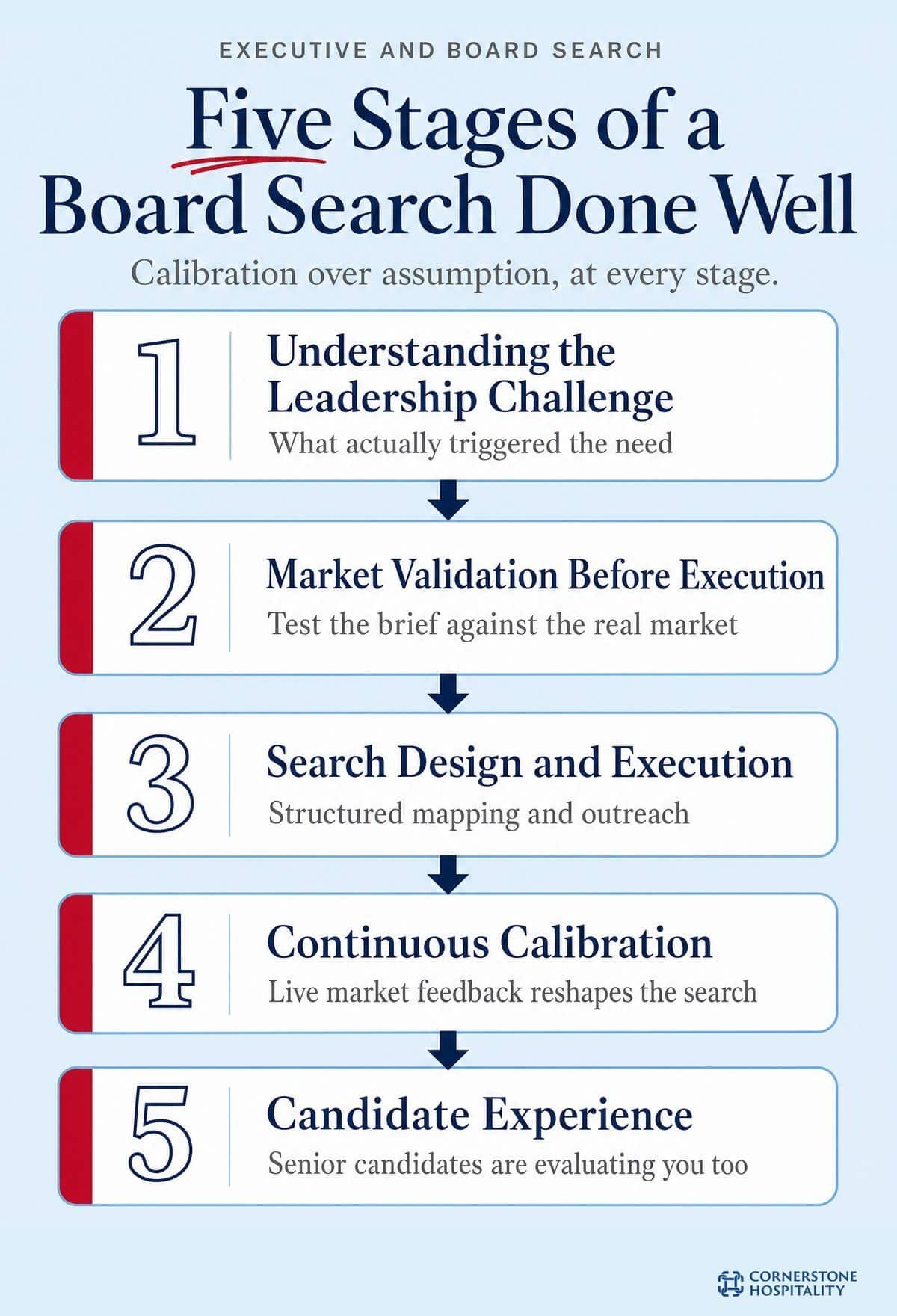
Die Methodik: fünf Phasen eines erfolgreichen Executive-Search- und Board-Search-Prozesses im Hotellerie-Bereich
Unser Prozess ist strukturiert, aber nicht linear. Er basiert auf einem kontinuierlichen Feedbackkreis zwischen drei Dimensionen: den Erwartungen des Aufsichtsrats, der Marktrealität und den Informationen zu Kandidaten. Die fünf nachfolgenden Phasen sind, wie wir diesen Kreislauf betreiben.
1. Das Verständnis der Führungsherausforderung
Wir arbeiten direkt mit Entscheidungsträgern zusammen, um zu verstehen, was die Suche tatsächlich ausgelöst hat. Darüber hinaus definieren wir, wie Erfolg in 12 bis 24 Monaten aussehen muss. Wir decken auch die Beschränkungen auf, die über die Aufgabenstellung hinausgehen, und die Annahmen, die getestet werden müssen. Diese Phase ist diagnostisch, nicht transaktional. Wir nehmen Briefings nicht einfach entgegen, wir hinterfragen sie.
2. Marktbewertung vor der Ausführung
Bevor wir die Richtung endgültig festlegen, konsultieren wir erneut den Markt. Diesmal testen wir die Verfügbarkeit und Motivation der Kandidaten, die Realität der Vergütung im Vergleich zu den Erwartungen und das Interesse an der Möglichkeit über Titel oder Markenwahrnehmung hinaus. Zudem analysieren wir die frühen Verhaltenssignale aus dem Talentpool. Dies schafft eine Realitätserhebung, die das endgültige Suchdesign informiert. Die meisten Firmen komprimieren oder überspringen diesen Schritt. Eine Kompression ist der häufigste Grund, warum eine Suche nach Führungskräften in der Hotellerie die falsche Shortlist produziert.
3. Suchtdesign und -durchführung
Nach der Kalibrierung entwickeln wir eine strukturierte Suchstrategie. Diese umfasst eine detaillierte Marktabbildung, Wettbewerbsanalysen sowie Unternehmens- und Chancenprofile. Darauf aufbauend erstellen wir eine gezielte Longlist, die sich aus Branchenkenntnissen und Netzwerkkenntnissen zusammensetzt, sowie eine mehrkanalige Kandidatenidentifizierung. Ein maßgeschneidertes Team leitet jeden Auftrag und wird entsprechend der Branchen-, geografischen und sprachlichen Kompetenz ausgewählt.
4. Kontinuierliche Kalibrierung während der Suche
Die Suche entwickelt sich durch Live-Marktfeedback. Kandidatenreaktionen und -motivationen fließen zurück in das Briefing. Ebenso fließen Intervieweinblicke von beiden Seiten, frühe Referenzinformationen und sich ändernde organisatorische Anforderungen ein. Wir behandeln jede Interaktion als Daten, nicht nur als Fortschritt. Infolgedessen verfeinern wir das Briefing kontinuierlich, bis die richtige Besetzung klar wird. Wir halten das ursprüngliche Briefing nie starr und pressen ungeeignete Kandidaten hinein.
5. Kandidatenerlebnis als strategischer Faktor
Auf der Ebene der Exekutive und des Aufsichtsrats bewerten Kandidaten mehr als nur die Rolle. Sie bewerten das System, in das sie eintreten. Wir sorgen für Konsistenz zwischen der Erzählung des Auftraggebers und der Erfahrung des Kandidaten mit disziplinierter Kommunikation und Feedbackschleifen. Ebenso führen wir qualitativ hochwertige Interviewprozesse durch, die dem Niveau der Rolle entsprechen und die Erwartungen und die Realität während des gesamten Prozesses aufeinander abstimmen. Eine schlechte Kandidatenerfahrung ist nicht nur ein operationelles Risiko, sondern auch ein Risiko für die Einstellung. Der stärkste Kandidat wird von einem nicht übereinstimmenden Prozess Abstand nehmen. Der falsche Kandidat wird alles akzeptieren.
Wo Personalberatungen für Führungskräfte in der Hotellerie und Aufsichtsratsmandate scheitern
Nach unserer Erfahrung in der Hotellerie Führungskräfte und Aufsichtsrat Suchen, gescheiterte Mandate scheitern nicht an mangelnden Kandidaten. Sie scheitern an:
Fehlende Übereinstimmung zwischen internen Erwartungen und der Marktrealität
Das Briefing beschrieb eine Führungspersönlichkeit, die der Markt nicht liefern konnte. Oder die die Rolle zu den gebotenen Bedingungen nicht annehmen wollte. Zu spät erkannt, führt dies zu einer Longlist von Kompromissen.
Instabile oder politisch beeinflusste Entscheidungskriterien
Die Kriterien ändern sich mitten im Prozess. Was in Woche 1 wichtig war, verschwindet bis Woche 6 heimlich. Starke Kandidaten erkennen die Instabilität und steigen aus.
Übermäßiges Vertrauen in Marken- oder Titelprestige
Optimierung der Shortlist nach Prestige anstelle von Passung. Der Kandidat mit dem bekanntesten Namen im Lebenslauf ist selten der richtige Führer für den spezifischen Kontext, in dem sich das Geschäft befindet.
Vergütung losgelöst von der Marktmotivation
Das Paket basierte auf internen Benchmarks und nicht auf Marktdaten. Die Kandidaten, die der Vorstand tatsächlich gewinnen möchte, sind wenig motiviert, sich zu engagieren.
Wie Erfolg aussieht
Die Vergabe allein definiert nicht eine erfolgreiche Suche nach Führungskräften und für den Aufsichtsrat. Stattdessen basiert der Erfolg auf einer klar kalibrierten Führungsanforderung, einem transparenten Entscheidungsprozess und einer starken Kandidatenansprache während des gesamten Prozesses. Vor allem beruht es auf einer Führungskraft, die über die ersten zwölf Monate hinaus leistungsfähig bleibt. Die Ernennung wird nicht nur zu einer Einstellung, sondern zu einer stabilisierenden Kraft für das Unternehmen.
Unsere Rolle
Wir agieren als Berater, nicht als Anbieter. Unsere Verantwortung besteht darin, sicherzustellen, dass der Aufsichtsrat Führungskräfte mit Klarheit, Marktentwicklung, strukturierten Herausforderungen und stetiger Anpassung an die Realität trifft. Wir präsentieren nicht einfach Optionen. Wir helfen dem Aufsichtsrat zu erkennen, welche Option am wahrscheinlichsten erfolgreich ist und warum.
Überlegen Sie einen Executive oder Vorstandssuchauftrag in der Hotellerie? Für ein vertrauliches Gespräch über die Kalibrierung Ihres Auftrags vor der Engagement, sehen Sie unsere Übersicht über Executive & Board Search oder Kontaktieren Sie das Team direkt. Erstgespräche sind vertraulich, kostenlos und darauf ausgerichtet, die Rolle und den strategischen Kontext zu verstehen.
Häufig gestellte Fragen
Was ist der Unterschied zwischen einer Personalberatung und einer Suchanfrage im Bereich Hotellerie?
Eine Personalberatung platziert operative Führungskräfte, CEO, COO, CFO, CCO, regionale Geschäftsführer, die die Strategie umsetzen. Eine Aufsichtsrats-Suche platziert nicht-executive Direktoren und Aufsichtsratsberater, die Leitung, Governance und eine unabhängige Perspektive bieten. Die beiden erfordern unterschiedliche Methoden: Die Suche auf Ausführungsebene dreht sich um operative Passgenauigkeit; die Suche auf Aufsichtsratsniveau dreht sich um komplementäre Fähigkeiten und intellektuelle Herausforderungen innerhalb des Führungssystems.
Wie lange dauert typischerweise eine Suche nach Führungskräften oder im Aufsichtsrat?
Die meisten Obermandate in der Hotellerie dauern von 10 bis 16 Wochen vom Start bis zum unterzeichneten Angebot. Die Suche auf Vorstandsebene für Nicht-Exekutive kann länger dauern, da die Abstimmung über das ‚fehlende Puzzlestück‘ am Anfang des Prozesses Zeit braucht. Die Komprimierung der Kalibrierungsphase, um Wochen zu sparen, kostet normalerweise Monate an geringerer Leistung am Ende.
Über Kalibrierung und Vertraulichkeit
Was bedeutet “Calibration” im Kontext von Executive Search?
Kalibrierung ist die Disziplin, das Anforderungsprofil vor, während und nach der Suche anhand des tatsächlichen Marktverhaltens zu überprüfen. Sie umfasst ein frühes Markt-Sensing zur Validierung der Verfügbarkeit, Vergütung und Motivation von Kandidaten; eine kontinuierliche Rekalibrierung, während das Feedback der Kandidaten eingeht; sowie die Bereitschaft, das Profil auf der Grundlage von Marktergebnissen zu verfeinern, anstatt zu versuchen, den Markt an das ursprüngliche Profil anzupassen.
Welches Maß an Vertraulichkeit hält Cornerstone Hospitality in Board-Level-Suchen aufrecht?
Vorstandstätigkeiten erfordern absolute Vertraulichkeit. Wir sprechen Kandidaten eins zu eins an, teilen den Kontext der Rolle, aber niemals den Namen des Auftraggebers, bis der Kandidat ernsthaftes Interesse zeigt, und arbeiten unter unterzeichneten Engagementverträgen, die die Informationsverarbeitung auf beiden Seiten regeln.
Florian leitet die globale Praxis für Hotellerie, Reisen & Freizeit der Cornerstone International Group. Er bringt siebzehn Jahre Erfahrung in der Hotellerie auf höchster Ebene mit, darunter Marriott, Hyatt, IHG, Mandarin Oriental und Shangri-La Hotels & Resorts, sowie sechzehn Jahre in der retained executive search. Er ist bilingual in Englisch und Deutsch und arbeitet in Europa, dem Nahen Osten, den Americas und dem asiatisch-pazifischen Raum.
Verbinden Sie sich mit Florian auf LinkedIn →